Marine Animal Rehabilitation
NMLC provides medical care and rehabilitation for sick, injured, and stranded sea turtles and seals found in our region. Each patient receives care based on its condition, species, and recovery needs, with the goal of returning healthy animals to the ocean whenever possible.
Jump to a Section
Rehabilitation Turns Crisis Into a Second Chance
Rehabilitation does more than help individual animals. It also creates opportunities to learn more about marine animal health, wildlife disease, and the environmental challenges affecting ocean life.
Why Cape Cod
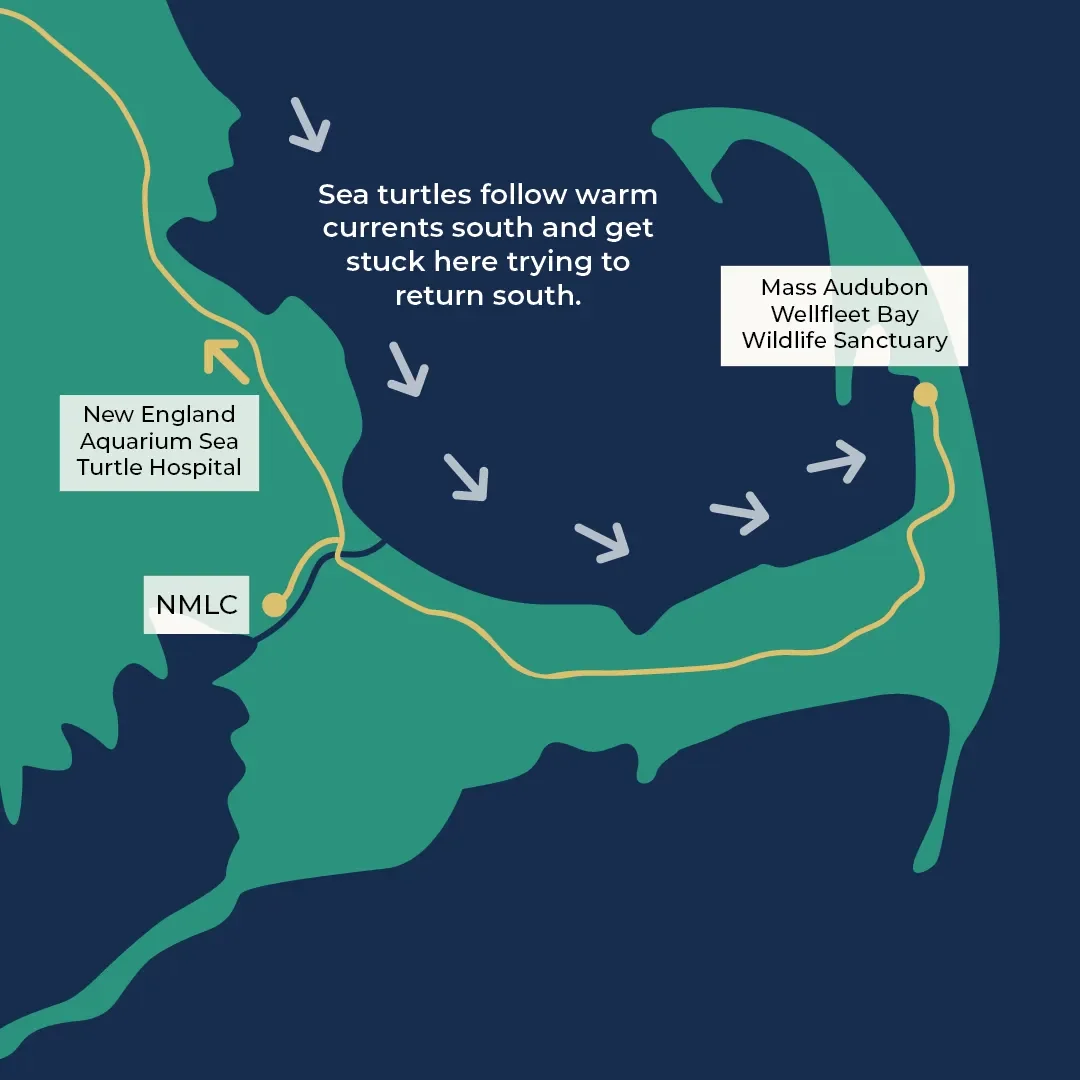
Cape Cod sees hundreds of live marine animal strandings each year, creating a real need for expert rehabilitation and care. NMLC exists to meet that need by helping stranded sea turtles and seals recover and, whenever possible, return to the wild.
Release and Tracking
When animals are healthy enough to return to the wild, NMLC may use identification and tracking tools to better understand post-release outcomes and ocean habitat use. This kind of work is valuable, but relocation and tracking can cost between $2,500 and $5,000, which limits how often it can be done. With greater support, NMLC hopes to expand these efforts over time.
The Animals We Rehabilitate
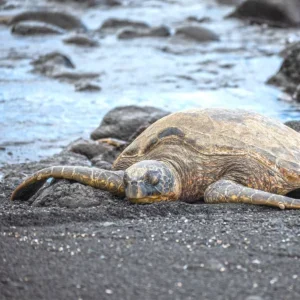
Kemp’s Ridley Sea Turtle
(Lepidochelys kempii)
The most common sea turtle that we triage and rehabilitate.
Status:
Endangered under the U.S. Endangered Species Act
Size:
About 2 feet
Weight:
70-100 pounds at adulthood
Lifespan:
25–35 years
Distribution:
Primarily Gulf of America / Gulf of Mexico; juveniles may range into the Atlantic as far north as Nova Scotia
Fact:
Kemp’s ridleys are the smallest sea turtles in the world.
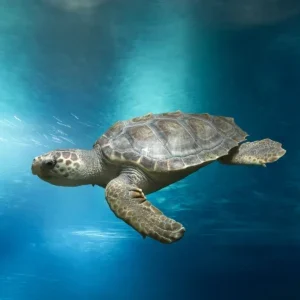
Loggerhead Sea Turtle
(Caretta caretta)
NMLC cares for loggerheads during long-term rehabilitation.
Status:
Threatened or endangered under the U.S. Endangered Species Act, depending on population
Size:
2.5–3.5 feet
Weight:
200–350 pounds at adulthood
Lifespan:
Estimated 70+ years
Distribution:
Worldwide in subtropical and temperate regions
Fact:
Loggerheads are named for their large heads and powerful jaws, which help them feed on hard-shelled prey.
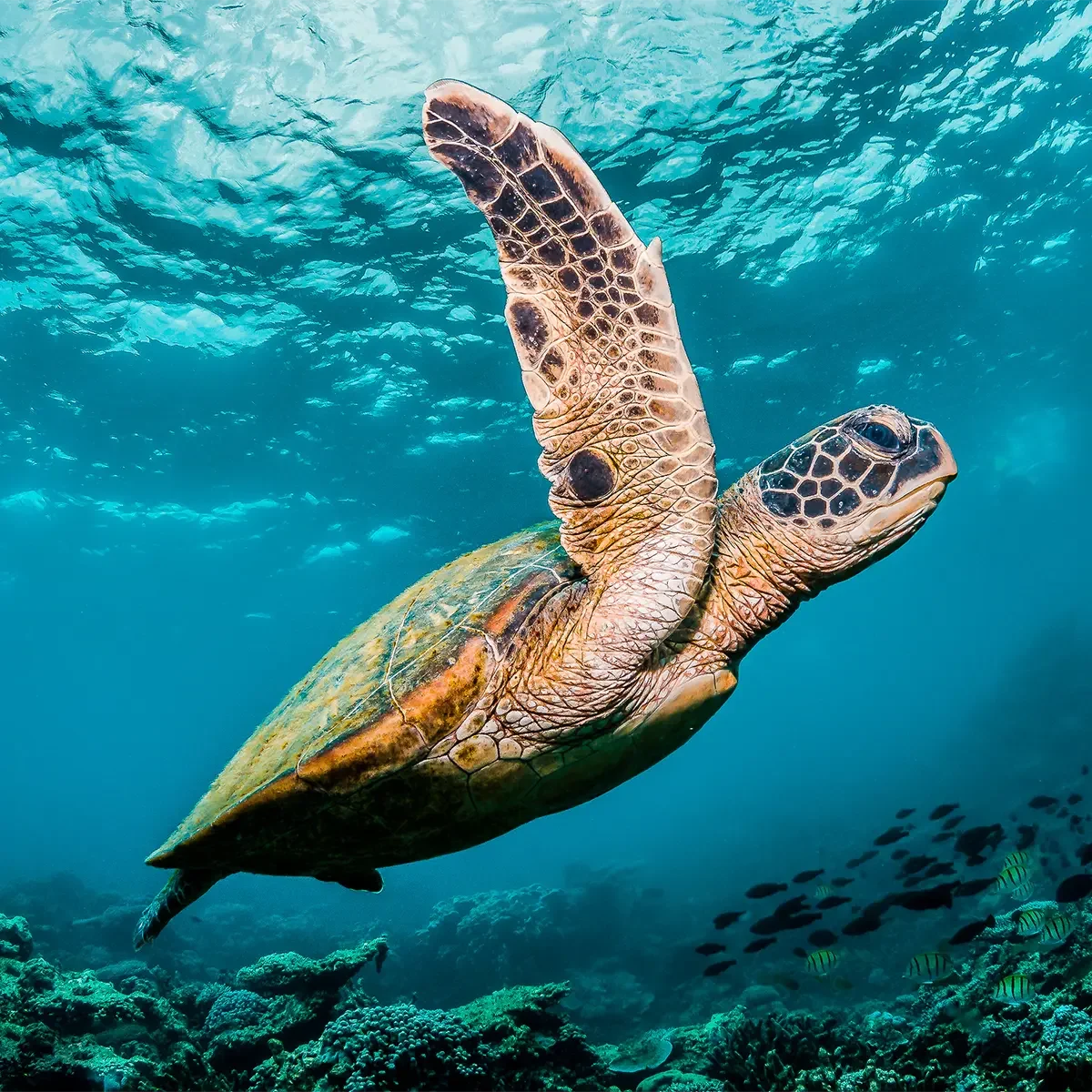
Green Sea Turtle
(Chelonia mydas)
NMLC cared for our first green sea turtle in 2020.
Status:
Threatened or endangered under the U.S. Endangered Species Act, depending on population
Size:
3–4 feet
Weight:
250–400 pounds at adulthood
Lifespan:
Estimated 70+ years
Distribution:
Primarily Gulf of America / Gulf of Mexico; juveniles may range into the Atlantic as far north as Nova Scotia
Fact:
Green turtles are the largest hard-shelled sea turtles and are mostly herbivores as adults.
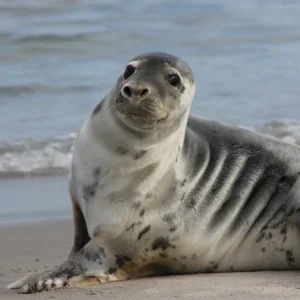
Gray Seal
(HALICHOERUS GRYPUS)
A year-round resident species with a distinctive long nose.
Status:
Protected under the Marine Mammal Protection Act
Size:
7.5–10 feet
Weight:
550–880 pounds at adulthood
Lifespan:
25–35 years
Distribution:
North Atlantic Ocean and Baltic Sea
Fact:
Their scientific name means “hooked-nosed pig of the sea,” and adult males are sometimes called “horseheads” because of their large, curved noses.
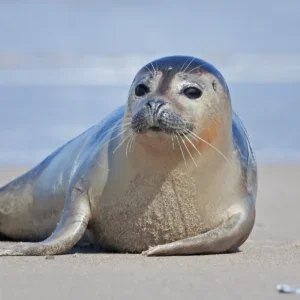
Harbor Seal
(PHOCA VITULINA)
A year-round resident species and one of the most common seals in our region.
Status:
Protected under the Marine Mammal Protection Act
Size:
About 5–6 feet
Weight:
180–285 pounds at adulthood
Lifespan:
About 25–30 years
Distribution:
Northern Atlantic and Pacific coastal waters
Fact:
Harbor seals have short, dog-like snouts and can have light fur with dark spots or darker fur with light rings.
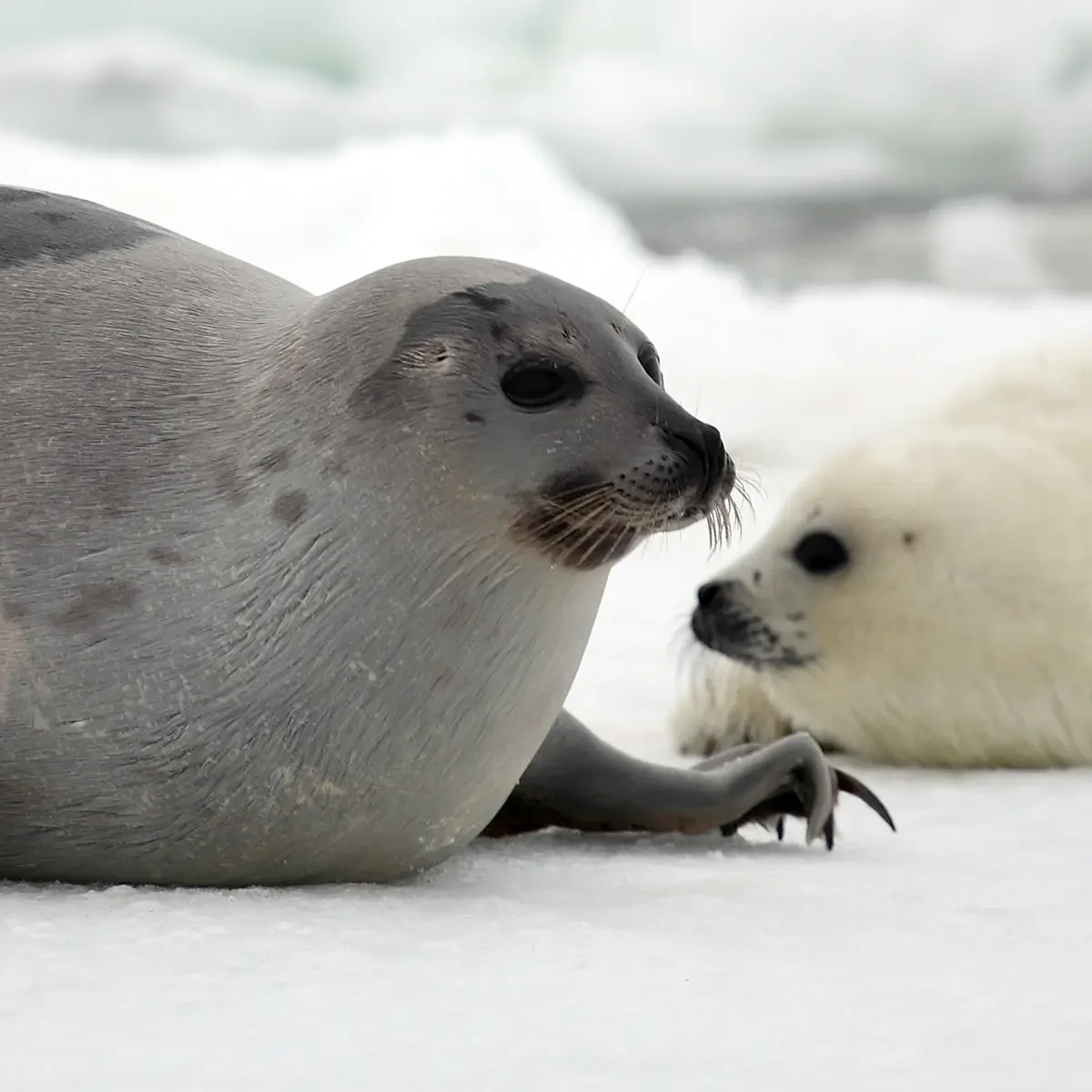
Harp Seal
(PAGOPHILUS GROENLANDICUS)
An Arctic species we most often see during winter and spring migrations.
Status:
Protected under the Marine Mammal Protection Act
Size:
About 5–6 feet
Weight:
260–300 pounds at adulthood
Lifespan:
About 30 years
Distribution:
North Atlantic and Arctic Oceans
Fact:
Harp seals are named for the dark harp-shaped marking that forms on the backs of adults.
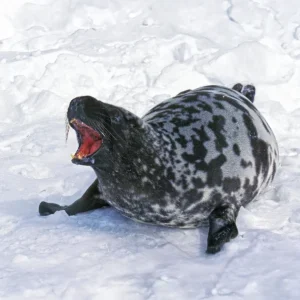
Hooded Seal
(CYSTOPHORA CRISTATA)
An Arctic species that may migrate farther south during winter.
Status:
Protected under the Marine Mammal Protection Act
Size:
6.6–8.5 feet
Weight:
320–776 pounds at adulthood
Lifespan:
25–35 years
Distribution:
North Atlantic and Arctic Oceans
Fact:
Adult males have an inflatable nasal “hood” and a red balloon-like nasal membrane used during mating displays and aggressive encounters.
We Need Your Support
Your gift helps NMLC care for stranded sea turtles and marine mammals, support science, and educate the public.