Marine Animal Science
NMLC’s rehabilitation work creates opportunities to learn from the animals in its care. Because sea turtles and marine mammals are difficult to study in the wild, rehabilitation creates a rare opportunity to observe patient health, monitor treatment, and better understand the challenges these animals face.
Jump to a Section
Science Turns Care Into Knowledge
Science remains an important part of NMLC’s mission, but active research depends on funding, staffing, equipment, and patient care capacity. When animals are in care, rehabilitation can create opportunities to observe, document, and better understand marine wildlife health.
What we learn can help improve that care, support conservation, and add to public understanding of marine wildlife health. That access can help answer important questions about animal health, disease, treatment response, and the threats marine animals face in their natural environment.
What Animals in Care Can Teach Us
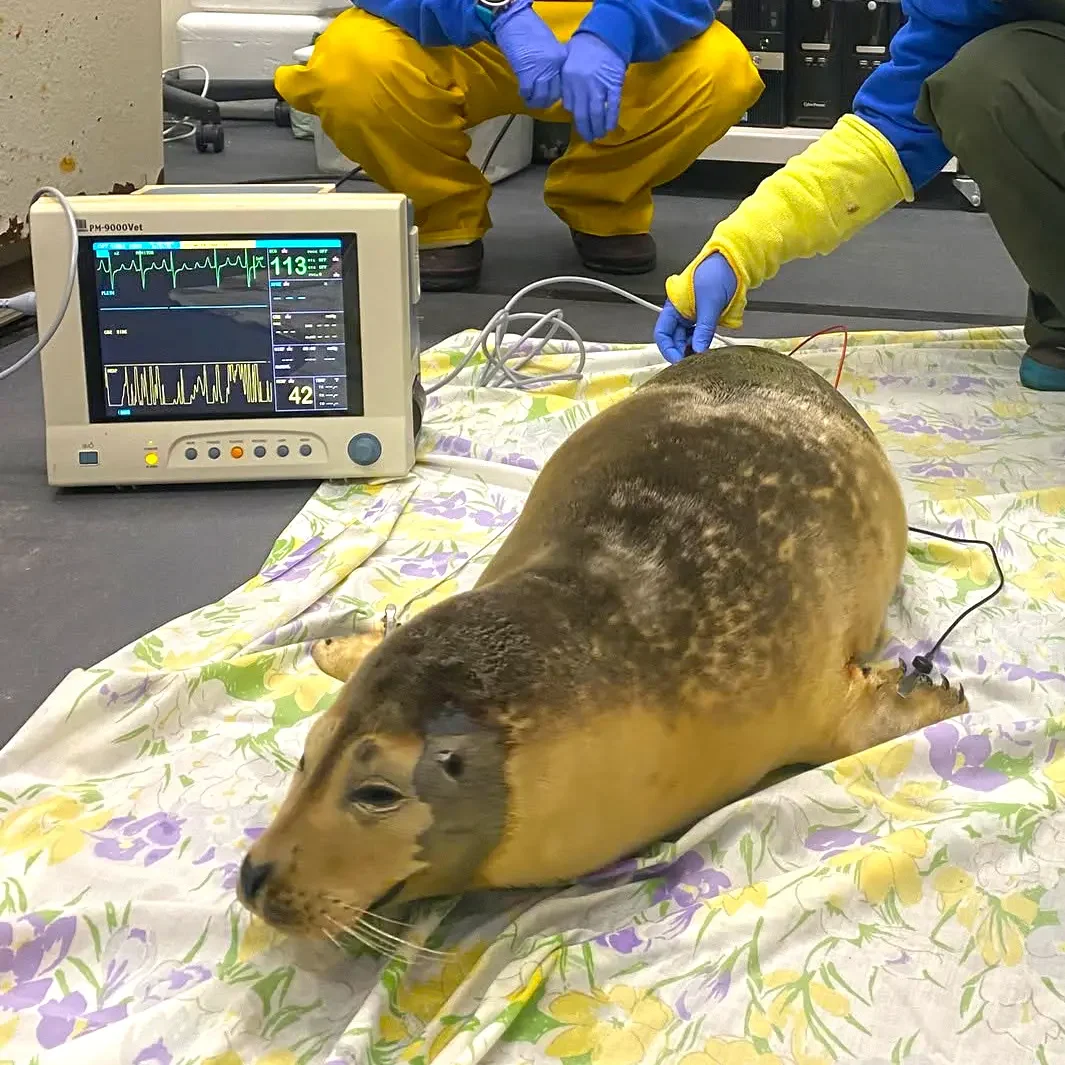
NMLC’s science and research opportunities are closely connected to the animals it treats: stranded sea turtles and marine mammals.
A recurring focus is animal health and disease, including parasites affecting sea turtles. This is a rare area of study and one of the ways NMLC can contribute to marine wildlife knowledge beyond the care of individual patients.
NMLC’s science work may help answer questions such as:
- What health conditions are affecting stranded sea turtles and marine mammals?
- How do diseases, parasites, or injuries progress while an animal is in care?
- How do animals respond to treatment over time?
- What can patient health tell us about threats in the wild?
- How can science help improve rehabilitation and release outcomes?
This science is not separate from animal care. It grows out of the rehabilitation work itself.
A Rare Look at Sea Turtle Parasites
While parasite research may sound specialized, it can reveal important information about animal health. Parasites can affect an animal’s condition, complicate rehabilitation, and provide clues about what an animal may have experienced before stranding.
Past parasite research has helped NMLC explore questions about sea turtle health, rehabilitation, and disease. Future work in this area will depend on funding, staffing, and patient care capacity.
This work can also give NMLC a way to connect science, rehabilitation, and public education. When visitors and supporters understand what researchers are looking for, even something as unexpected as parasite research becomes part of a larger conservation story.
“Parasites found on the outside of Sea Turtle shells are called epibiota. Epibiota can be organisms like algae, barnacles, crabs, shrimp, or remoras.”
Looking Ahead
Future research at NMLC will depend on funding, staffing, patient capacity, and program priorities. As resources allow, there may be opportunities to expand work connected to rehabilitation, animal health, disease, parasites, and conservation.
Future growth may include stronger lab capacity, expanded public-facing science communication, and better ways to share what we're learning.
Strengthening the Lab
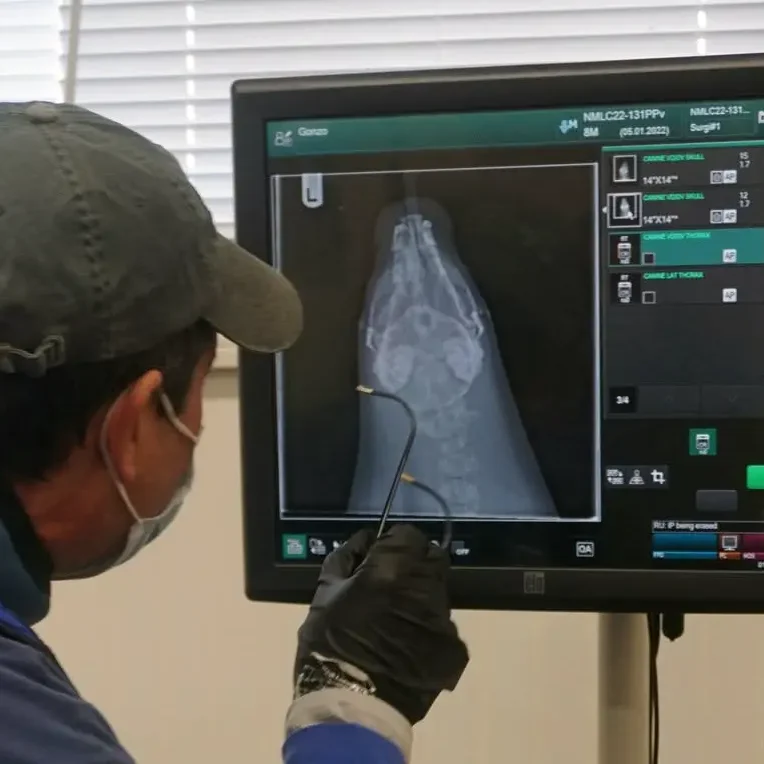
New lab equipment, including a research microscope, gives NMLC stronger tools for examining samples when research and patient care needs allow.
As this area grows, NMLC’s science work has the potential to become an even stronger part of the organization’s contribution to rehabilitation, conservation, and marine wildlife health.
Science Posts
-
Parasitologist Dr. Murray Dailey visits center
World renound parasitologist, marine mammal parasitology expert, and author Dr. Murray Dailey visited the NMLC for a full week of meetings and laboratory instruction. Resident veterinarian Dr. Sea Rogers Williams,…
-
National Marine Life Center Paper Published in Journal of Zoo and Wildlife Medicine
The National Marine Life Center (NMLC) is pleased to announce the publication of a peer reviewed scientific paper, written by Dr. Charles Rogers Williams, in the field of wildlife rehabilitation,…
-
The 19th Biennial Conference on the Biology of Marine Mammals
Last week I had the opportunity to attend (for my first time) the 19th Biennial Conference on the Biology of Marine Mammals organized by the Society for Marine Mammalogy. The…
-
Where in the world: Dr. Rogers Travels: Provincetown Town, Cape Cod
Dr. Williams traveled to the tip of Cape Cod to the Provincetown Center for Coastal Studies last week to talk on One Health, the role of the National Marine Life…
-
Where in the World: Dr Rogers Travels: Boston
Drs Williams and Dunnigan participated in a NOAA Fisheries sea turtle serious injury workshop where they presented examples of sea turtle / fishery interactions and lead discussions on the significance…
-
Virtural (Path) Rounds
Dr. Williams participated in the first Marine Mammal Pathology Virtual Rounds sponsored by NOAA today. Pathology cases were submitted from the stranding network, and reports were made available for review…
-
Where in the World: Dr. Rogers Travels: Martha’s Vineyard
A sea turtle and marine mammal stranding training session hosted by the New England Aquarium on Martha’s Vineyard was attended by Drs. Williams and Dunnigan. This was a local meeting…
-
Where in the World: Dr. Rogers Travels: Woods Hole
US Fish and Wildlife and biologists from the state of Florida came to the Northeast Region to hold a one-day training course in Woods Hole on Manatee Strandings. Manatees sightings…
-
Where in the World: Dr. Rogers Travels: Florida
Dr. Williams was an invited speaker at the South East Region Stranding Conference were he presented a talk on Cetacean Euthanasia, a difficult topic but one that veterinarians, stranding personal,…
-
In Search of a New Host
As part of our on-going studies of the endangered Kemp’s ridley sea turtle and our quest to understand the events that surround the cold-stun phenomenon that results with the stranding…
-
Pathology and Parasitology
As part of our on-going studies of the endangered Kemp’s ridley sea turtle and our quest to understand the events that surround the cold-stun phenomenon that results with the stranding…
-
New Parasite from Kemp’s Ridley
The loss of Caveman, a Kemp’s ridley sea turtle that died of sepsis and pneumonia following a cold-stun event last fall, was difficult for the entire staff, but we are…
-
Under the Microscope Introduction
In this section, “Under the Microscope,” we present our scientific endeavors, particularly the study of parasites and parasitic diseases found in stranded animals. For more information, contact Dr. Sea Rogers…
Support Future Science at NMLC
Your gift helps support the resources that make future science work possible, including lab equipment, staff time, patient care, and research capacity.