
Meet the Diamondback Terrapin: Massachusetts’ Salt Marsh Turtle
The diamondback terrapin (Malaclemys terrapin) is the only turtle in Massachusetts that is predominantly found in salt marshes and estuaries.
In Massachusetts, the northern diamond-backed terrapin (Malaclemys terrapin terrapin) is limited to Cape Cod, Buzzards Bay and the lower Taunton River watershed. It’s listed as threatened in the Massachusetts Endangered Species Act.
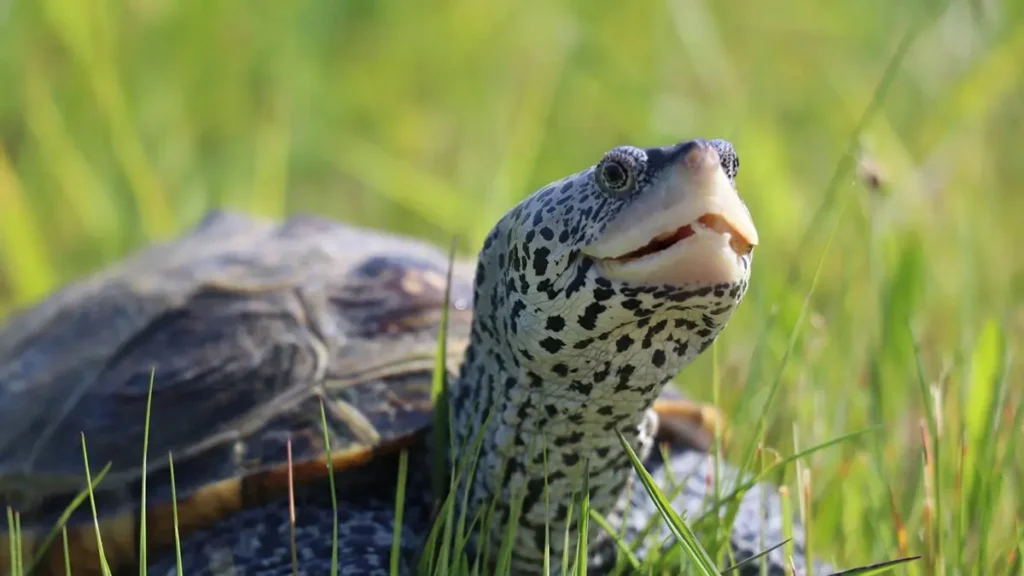
The carapace or top shell can appear gray to light brown and may have tan, green or orange markings on the shell. Their head and limbs are gray to white with small dark spots and their jaw is usually light-colored. Terrapins have large heads and their jaws are usually light-colored. Females are larger than males, reaching lengths of 6-9 inches and males are usually 4-6 inches in shell length.
From late October to early April, they are in a hibernation-like state called brumation, submerged in the muddy bottom of salt marshes and similar areas. When the water warms, they emerge and congregate to court and mate. The females begin nesting in June in dry sandy areas above the high tide line. She digs a flask shaped nest and deposits between 12-18 eggs. The eggs incubate for about 60 days. She may nest twice during the season.
The terrapins are opportunistic omnivores, and commonly eat crabs, crustaceans, mollusks, and insects.
Several groups in Massachusetts headstart these terrapins. Hatchlings are collected in the wild and raised over the winter. When they are released about 9 months later, they are the size of a wild 3-year-old turtle which significantly increases their survivability.