Marine Animal Education
NMLC helps people understand marine animals, rehabilitation, and the conservation issues affecting sea turtles and seals in our region. Through public learning, community outreach, digital outreach, and in-person experiences, education helps turn awareness into care and support.
Jump to a Section
Education Turns Curiosity Into Care
When people learn how marine animals become stranded, what threats they face, and how rehabilitation helps them return to the ocean, they begin to see local marine life differently.
A cold-stunned sea turtle, an entangled seal, or an animal affected by parasites is no longer an abstract idea. It becomes part of a larger story about wildlife health, ocean conditions, and the role people can play in helping here on Cape Cod and beyond.
NMLC’s educational work supports the broader mission by helping the public better understand:
- The marine animals that live in and migrate through our region
- Why sea turtles and marine mammals strand
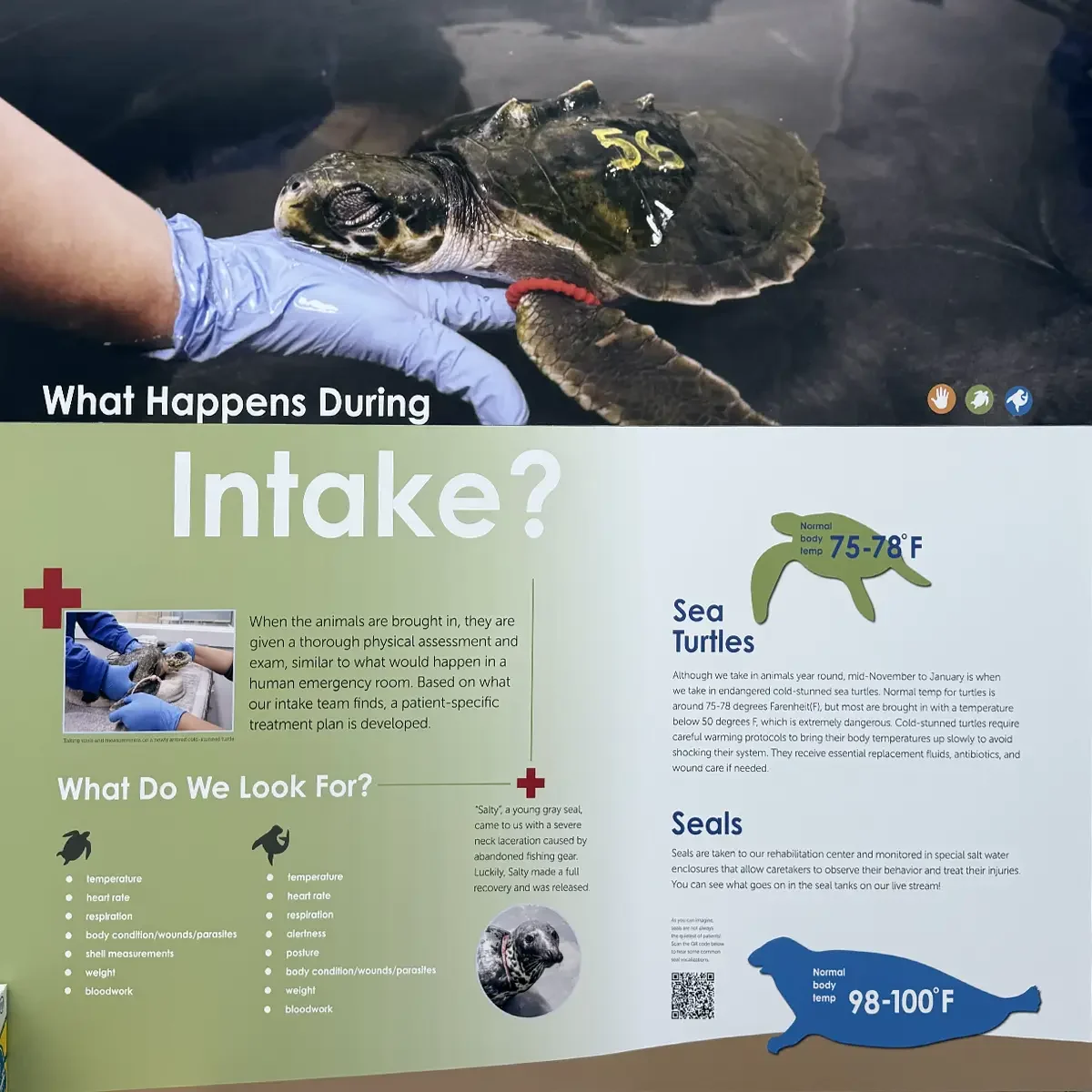
- How rehabilitation works
- What cold-stunning, entanglement, parasites, and other threats mean for marine wildlife
- Why conservation, science, and public awareness are connected
- How community support helps make rehabilitation and release possible
How NMLC Educates
The Discovery Center is NMLC’s main public learning space and the best way to experience the education mission in person.
Through exhibits, hands-on activities, and conversations with NMLC staff and volunteers, visitors can learn about sea turtles, seals, rehabilitation, and the regional threats affecting marine animals.
The Discovery Center also helps explain why NMLC is not an aquarium. The goal is not to keep animals on display, but to help sick and injured animals recover and return to the ocean whenever possible.
When patients are in the building, visitors may also be able to see a live video feed from the rehabilitation hospital.
“The more people understand about stranded marine animals and the threats they face, the more connected they become to the work of protecting them.”
In-Person Learning
NMLC’s education work is designed to make marine animal rehabilitation, conservation, and ocean health easier for the public to understand.
Today, that education happens in several ways: through the visitor experience at the Discovery Center, digital outreach, community engagement, and developing programs that will continue to grow over time.
Digital Outreach
NMLC uses social media, video, website updates, and other online communication, to share information about stranded animals, rehabilitation, conservation issues, patient updates, seasonal wildlife concerns, and ways the public can help.
This helps NMLC reach people who may not be able to visit the Discovery Center while encouraging supporters, families, educators, and community members to stay engaged over time.
Community Outreach
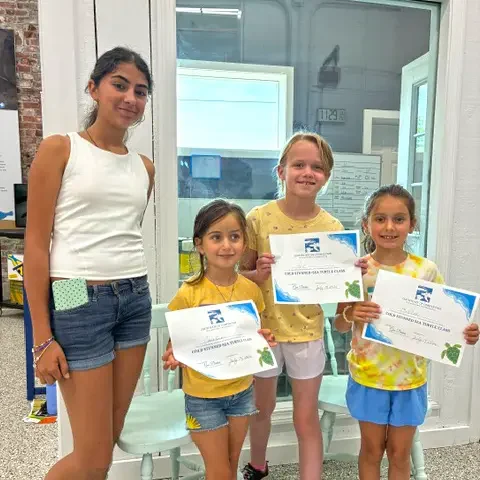
NMLC is also working toward more structured educational programming as space, staffing, and resources allow.
Future growth may include youth programming, school and community partnerships, interactive displays, take-home educational materials, and presentations for different age groups and learning levels.
Looking Ahead
As the Discovery Center develops, NMLC plans to expand exhibits, add more interactive displays, create take-home educational materials, and build partnerships with schools and community organizations.
The Discovery Center is still under renovation as Phases 2 and 3 continue. Completing that space will allow for additional exhibits and a stronger visitor learning experience.
Looking ahead, NMLC hopes to host educational speakers, offer educational events, and provide presentations for a wide range of audiences.
This growth will take time, space, staffing, and support. But the goal is clear: to help more people understand marine animals, rehabilitation, conservation, and the role we all play in protecting the ocean environment.
Native Turtle Conservation & Education
Not every turtle connected to NMLC is a rehabilitation patient. Daisy and Victor are permanent residents who help educate visitors, Northern red-bellied cooters receive a conservation head start before release, and Northern diamond-backed terrapins are occasionally cared for by NMLC. Together, they help people learn about native turtles and the different ways conservation work can support them.
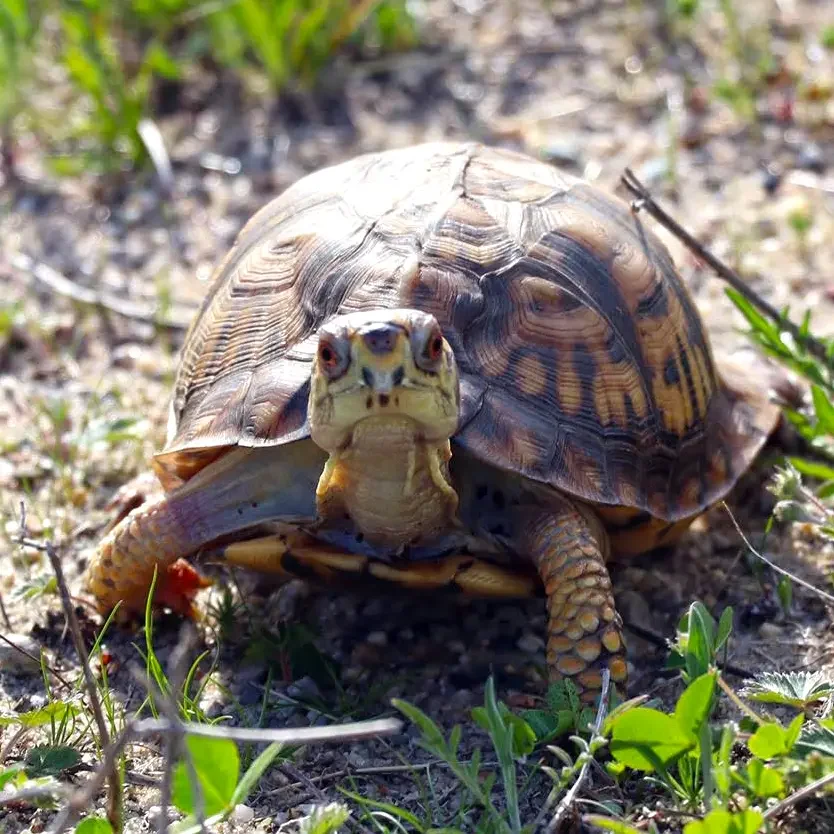
Eastern Box Turtles
(Terrapene carolina carolina)
Massachusetts’ only terrestrial turtle, found in woodlands and fields.
Status:
Special Concern in Massachusetts
Size:
4.5–6.6 inches
Weight:
About 1 pound
Lifespan:
More than 50 years
Distribution:
Eastern United States; more commonly found in southeastern Massachusetts
Fact:
A hinged lower shell allows an Eastern box turtle to close its shell completely around its head, legs, and tail.
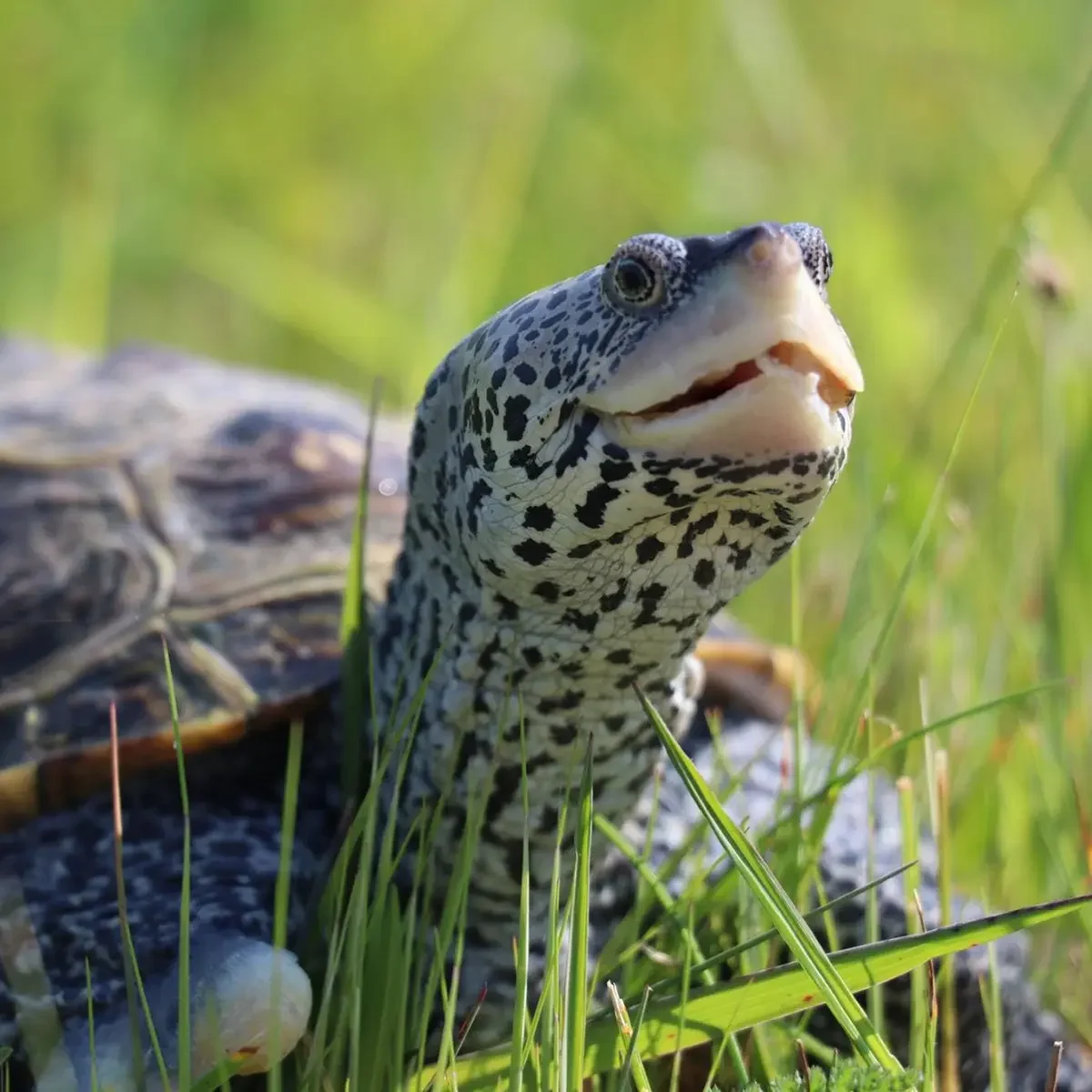
Northern Diamond-backed Terrapin
(Malaclemys terrapin terrapin)
A threatened turtle found in Massachusetts salt marshes and estuaries.
Status:
Threatened in Massachusetts
Size:
4–9 inches
Weight:
0.6–4.8 pounds
Lifespan:
At least 40 years
Distribution:
Cape Cod, Buzzards Bay, and the lower Taunton River watershed
Fact:
Several groups in Massachusetts headstart diamond-backed terrapins to improve hatchling survival.
Northern Red-bellied Cooter
(Pseudemys rubriventris)
A rare freshwater turtle found mostly in southeastern Massachusetts.
Status:
Endangered in Massachusetts and federally endangered in Massachusetts
Size:
10–13 inches
Weight:
Up to 12.7 pounds
Lifespan:
More than 50 years
Distribution:
Mostly Plymouth and Bristol Counties, with smaller populations in Norfolk and Barnstable Counties
Fact:
The Northern red-bellied cooter is the largest basking turtle in Massachusetts.
Educational Posts
-
Meet the Diamondback Terrapin: Massachusetts’ Salt Marsh Turtle
The diamondback terrapin (Malaclemys terrapin) is the only turtle in Massachusetts that is predominantly found in salt marshes and estuaries. In Massachusetts, the northern diamond-backed terrapin (Malaclemys terrapin terrapin) is…
-
Meet the Northern Red-Bellied Cooter: An Endangered Turtle Getting a Head Start
(Pseudemys rubriventris) is the largest basking turtle in Massachusetts. The only larger freshwater turtle is the common snapping turtle. An adult Northern Red-bellied Cooter shell length ranges from 10-13 inches,…
-
Meet Daisy and Victor: NMLC’s Box Turtle Ambassadors
Daisy and Victor are permanent residents at NMLC after previously being kept illegally as part of the wildlife trade. Because they were housed with turtle species from around the world—and…
-
Amazing Seal Adaptations
I am one of the interns working at the NMLC this summer, and I am thrilled to have the opportunity of assisting in the rehabilitation of fascinating marine and aquatic…
-
The Two Different Kinds of Whales in the World: Toothed Whales vs. Baleen Whales
There are about 86 species of whales, dolphins, and porpoises in the world’s oceans, and they are divided into two distinct groups: Mysticetes (baleen whales) and Odontocetes (toothed whales). There…
-
The Importance of the Marine Mammal Protection Act of 1972
Enacted by Congress in October of 1972, the Marine Mammal Protection Act (MMPA) is extremely important for the conservation of many marine mammal species. At the time of the law’s…
-
Is it a turtle, a terrapin, or a tortoise?
Recently, the National Marine Life Center welcomed Lindsay, a diamondback terrapin, to the family. Two Eastern box turtles, Daisy and Violet, are also NMLC residents in the Discovery Center. Next…
-
Marine Animal Medical Mystery
The last week at the National Marine Life Center has been full of excitement. With summer in full swing and lots of families heading to the Cape for a getaway,…
-
How Can You Tell Which Whale You Are Looking At?
We use the name whale for about 70 kinds of animals. So how can you tell who is who? Not all 70 kinds live in the area around Cape Cod.…
-
What is a Whale’s Spout?
Is a whale’s a fountain of water? Both whales and people use lungs and noses to breathe air. But because whales live in the water their noses and lungs work…
-
How Do Whales Breathe?
Because whales live in the ocean, many people think they are fish. But do you know that whales and dolphins are not fish? They are mammals. People are mammals too.…
-
Are Whales Fish?
Whales are not fish. But how do you know? You can tell the difference by watching the animal and asking yourself three questions: Does its body move sideways or up…
-
How Do Whales and Dolphins Swim?
How would you describe the shape of a whale or dolphin? Wouldn’t you say they are very streamlined? Very few appendages (like your arms and legs) stick out to slow…
-
Where Did Whales Come From?
When you’re watching the actions of the biggest creatures on earth, ask about what animals they are related to. Are they fish? Are they related to sharks? Are they related…
-
How do Whales Eat?
What you would eat if you lived in the ocean? If you said fish and squid, you’d be right. But there’s a second correct answer – some whales eat ocean…
Start Learning with NMLC
The best way to experience NMLC’s education work in person is to visit our newly renovated Discovery Center.